SLEEPY FOX
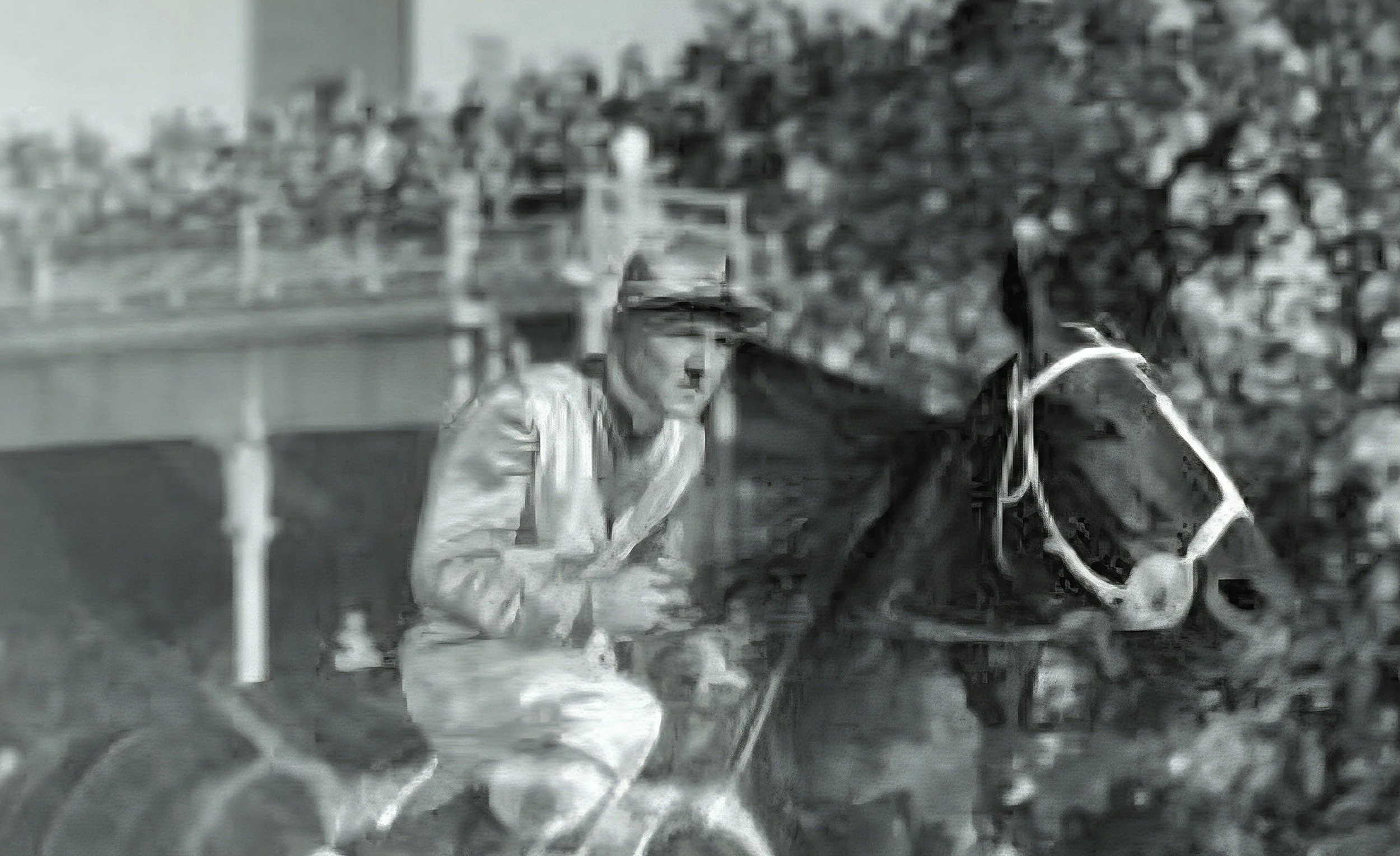
A four time Easter Handicap winner in the 1940s, Sleepy Fox is one of the great forgotten horses of the New Zealand turf
Horses like KINDERGARTEN (a two-time winner), TUDOR LIGHT, GREY WAY, SEDECREM, EL GALLO, and FOXBRIDGE have left an indelible mark on the prestigious Easter Handicap, first held at Ellerslie in 1864. Numerous distinguished equines have left an indelible mark on the annals of one of New Zealand's most venerable horse races, among them a somewhat overlooked but exceptionally talented galloper who often receives insufficient recognition.
It was a ‘little known’ racehorse by the name of SLEEPY FOX for whom many have forgotton as the true hero of the Easter Handicap and one of our best gallopers during the tumultuous World War II era. This was a horse who most certainly did not sleep on the job with the gelding dominating the race an incredible four times in succession in the mid-1940s, earning admiration from fans and experts alike. While the gutsy gelding has been described by some as not a “champion…but out of the top drawer” hailing from trainer Tom Verner’s stable, there is no doubting his astonishing feat most definitely deserves a spot in the race’s history books.
SLEEPY FOX's path to Easter Handicap success commenced with a modest beginning, as the then three-year-old FOXBRIDGE colt could not even achieve a placing in the 1943 event while the war was still raging in Europe and the Pacific. Trained by Tom Verner, he had a good reputation as a promising racehorse without quite living up to it. In 1943, New Zealand's war effort reached a turning point, marked by a transition from the North African campaign to the Italian campaign, a more direct involvement in the Pacific, and the peak of wartime production and rationing at home. Any distraction was a welcome one and many in Auckland turned to Ellerslie determined to carry on with life as normal as possible, with Ellerslie Racecourse acting as a central hub for major events, while Avondale Racecourse was used for military purposes. Train was often the easiest way to get to Ellerslie and carriages where often heaving with racegoers eager to see some exciting racing.
Race days were reduced during the war, and transport limitations created challenges for attending meetings. Despite this, meetings were sometimes used to raise patriotic fund and big crowds would be in attendance. Nevertheless, Sleepy Fox swiftly established himself as a formidable contender during this period, achieving a decisive victory in the 1944 feature race by an impressive five lengths, carrying a weight of 8 stone (51kg) under the expert guidance of jockey Joe Williamson. In the subsequent year, he once again exceeded expectations, securing the coveted title with jockey Ian Galvin aboard, carrying a substantial weight of 9 stone 5lb (59.5kg).
His journey towards distinction, however, was not without its challenges. A visit to Australia brought initial successes in the Canterbury Stakes and Chelmsford Stakes, which earned him recognition as an emerging talent. The New Zealand miler was enjoying his first campaign in Australia under the guidance of trainer Bayley Payten. In fact, SLEEPY FOX beat home RUSSIA - who would go on to win the 1946 Melbourne Cup - and champion colt MAGNIFICENT in the Chelmsford with ridiculous ease and appeared to be only cantering from start to finish. After the race, rider Darby Munro said: "After Sleepy Fox settled down I let him bowl along on the bit, and I thought I had the race won five furlongs from home. I think he is a real good one."
Paddock bookmaker W. Mulligan paid a bet of £1375 to a returned prisoner of war at Randwick. The soldier had only arrived from Europe on the Friday with an A.I.F. batch of releases. He told friends that he had won £500 gambling during the trip. He took a cash bet of £875 to £500 on SLEEPY FOX in the Chelmsford Stakes. When he collected he said: "I'm not long out of a prison camp. This will set me up in business. Mulligan's reply was: "Keep it. Don't test your luck too far. It might break." £1,375 in 1944 is equivalent in purchasing power to approximately $149,000 AU dollars today.
Support which is unlikely to have been stable-inspired was accorded Sleepy Fox to such an extent after those two victories that the New Zealand-owned horse was moved up to share favouritism for the Newmarket Handicap with champion gallopers BERNBOROUGH and ROYAL GEM. ACCESSION fluked him by half a head in the nine furlongs Clarendon Stakes at Rosehill, but in the first running of the WFA George Main Stakes at Randwick in October 1945, Sleepy Fox was odds-on favourite against weak opposition and not expected to be troubled up to the mile. It was no to be as he finished back four lengths in 2nd place to MODULATION, with many saying it wasn't a surprise as the form of the Kiwi horse begun to tail off. A sudden decline in performance rendered him a mere shadow of his former self, with reports upon his return to New Zealand describing the gelding as "looking like a skeleton."
Remarkably, a mere six weeks later, Sleepy Fox achieved an unexpected triumph in the 1946 Easter Handicap. This victory underscored the horse's exceptional resilience and champion qualities, as he carried a substantial 10 stone 2lb (64.5kg) to the win, a significant 20kg more than the runner-up, PRINCE REVEL. The Handicapper, nor Heavy tracks could stop the powerful galloper, who by now was a fan favourite with cult-like status and had returned to his former self.
One year later the now seven-year-old horse returned for his fourth and final Easter Handicap victory. Despite carrying 9 stone 13 (63kg), Sleepy Fox delivered a stellar performance, securing victory over the race favourite, HOT PURSUIT, with FOXWYN in third, thereby solidifying his reputation as potentially the most cherished champion of this event.
Sleepy Fox's enduring legacy, a testament to the indomitable spirit and unwavering determination that defines the essence of the Easter Handicap, is attributed to owners Elliot Davis, in partnership with Oliver Nicholson, who served as president of the Auckland Racing Club from 1933 to 1945. The Verner name too has lived on with the race, with Tom’s son Ray producing a TURFCUTTER - PHEROZ JEWEL quinella in the 1974 edition, and Ray’s son Kerry then training the winner of the 1991 edition with the aptly-named RAY’S HOPE before going on to win it again as an owner with ZAYYAD in 2000.
It is imperative that we recognise and preserve the legacy of SLEEPY FOX, a remarkable NZ-bred equine athlete who achieved the extraordinary feat of winning a major New Zealand feature four consecutive times and successfully competed against, and often triumphed over, some of Australia's most distinguished gallopers during a pivotal era in racing history.