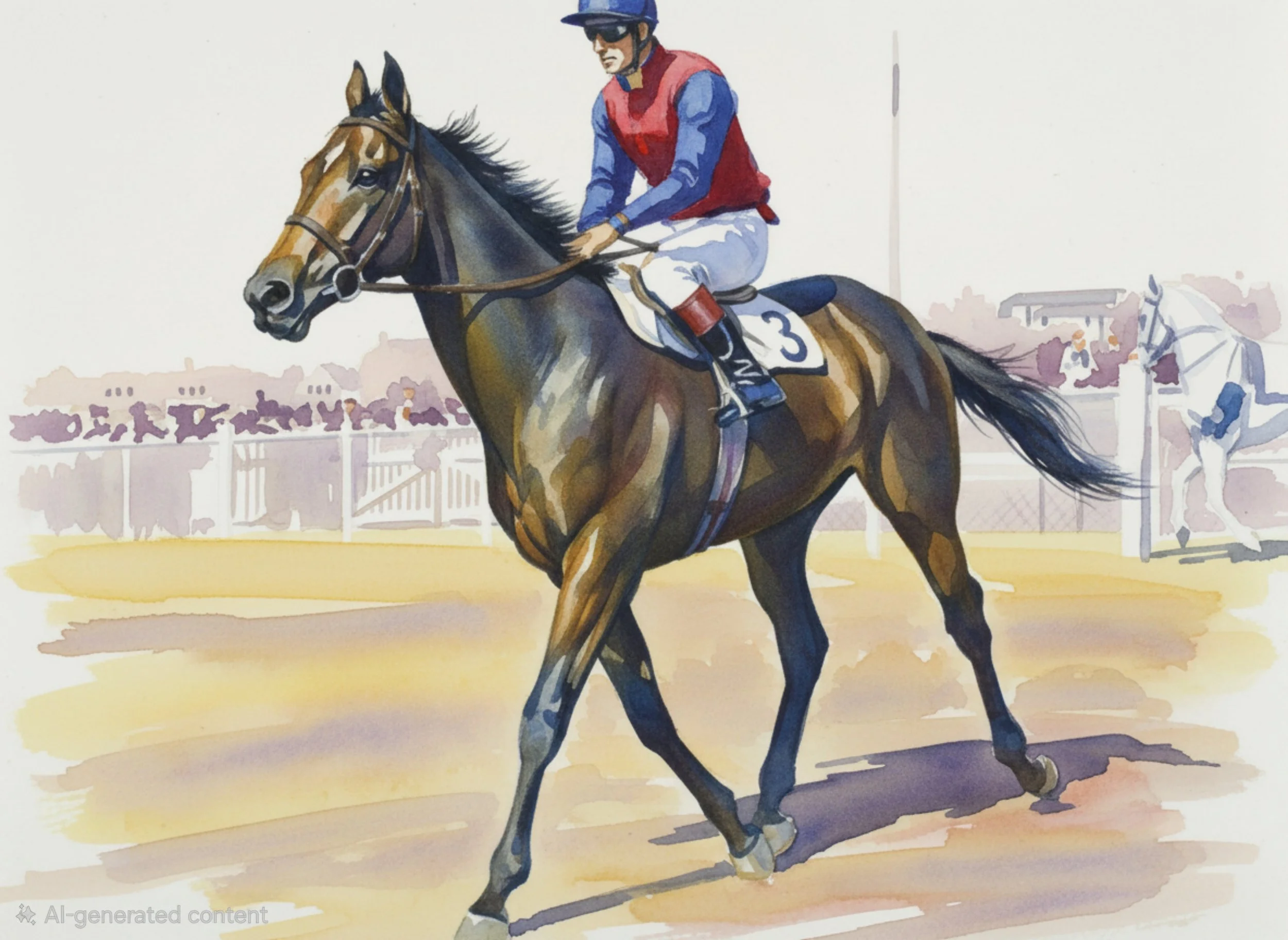
ROYAL CHIEF
Fred Jones travelled Royal Chief to Sydney many times and took on the finest gallopers of the era, including the great superstar, Ajax
ROYAL CHIEF was a celebrated New Zealand Thoroughbred racehorse and champion stallion, widely recognised for his stellar racing career in the late 1930s and for siring elite progeny that dominated New Zealand turf in the 1940s. Foaled in 1934, the bay colt by CHIEF RULER from MODISTE II was a major National Yearling Sale graduate who took the racing world by storm. Royal Chief was bred by John Donald who founded Westmere Stud in Wanganui in 1924. Both the dam Modiste II and the sire Chief Ruler were imported by Donald and both proved highly successful, with MODISTE also producing fine sire BEAU REPAIRE (Beau Pere) who in turn sired the stunning NZ galloper BEAUMARIS. Catalogued as the first living foal, Royal Chief was purchased in 1936 on commission for by Derek Gould for Christchurch businessman, A. K. Firth, who was making his first venture into the racing sport at the encouragement of his wife and daughter.
Royal Chief was a standout stayer and weight-for-age performer competing against champions on both sides of the Tasman. His most notable achievements included the New Zealand St. Leger (1938) along with conquering major Australian tracks by winning the prestigious AJC Metropolitan Handicap in Sydney (1938) and the Colin Stephen Stakes (1938 and dead-heating in 1939). Under the guidance of Riccarton trainer Fred Jones, ROYAL CHIEF achieved five victories as a two-year-old, notably the 1936 Gr.2 Great Northern Foal Stakes and an autumn hat trick in 1937, comprising the Gr.3 North Island Challenge Stakes at Trentham, the Listed Champagne Stakes, and the weight-for-age Challenge Stakes at Riccarton. Six wins at three included the Wanganui and Avondale Guineas, the Gr.1 New Zealand Derby and the 1938 Gr.2 New Zealand St Leger. He was, however, beaten by COURTCRAFT in the 1938 Gr.1 ARC Great Northern Derby.
Fred Jones had emerged from the shadows in the 1920's as one of New Zealand's most promising trainers. Back in 1905 as a skilled young jockey, Jones had ridden the Taranaki galloper, MANIAPOTO, to win the A.J.C. Metropolitan Handicap. Fred Jones, during his apprenticeship, trained at Yaldhurst under the esteemed Dick Mason, serving as the second jockey to Tod Hewitt within that distinguished establishment. Jones gained prominence in mid-1904, achieving five victories riding the champion three-year-old filly, GLADSOME. These wins included prestigious races such as the Great Northern Derby, Auckland Plate, and Wellington Cup. However, the New Zealand Racing Conference subsequently disqualified the horse from all these victories, citing a technicality regarding Jones' apprentice license, a decision that was met with considerable surprise. Despite this setback, Jones went on to win many prestigious events for Yaldhurst in the colours of G.G. Stead.
In 1923, the ambitious trainer travelled a team of horses to Sydney via the steamer Ulimaroa accompanied by little known, 20-year old Hawera born jockey Maurice McCarten. ZARAGOZA, URGENCY and BALLYMENA would all win their first runs in Sydney for Jones, with ill-fated Ballymena going on to win the A.J.C Derby, and the trainer helping himself to some of the 25/1 odds offered by Bookies. Before the Ballymena Derby win, the most significant race in which Jones had trained a winner was the 1921 Auckland Cup, achieved with MALAGA.
After travelling back to Australia in 1924, both Fred Jones and McCarten were found guilty of improper practices after the poor performance of ROYAL DESPATCH and each disqualified for twelve months. The stewards’ decision triggered a huge controversy on both sides of the Tasman, particularly given that Jones was training for some of the most distinguished sportsmen in New Zealand at the time. A week later BALLYMENA equalled the course record to beat GLOAMING and THE HAWK and win the Hill Stakes at Randwick under the guidance of fellow Kiwi trainer, George Price. In doing so, Ballymena was one of only two horses to beat Gloaming in arguably his greatest season on the turf. Tragically, the brilliant Ballymena would lose his life on the Australian turf, but his little half-brother, LIMERICK would revive the dented reputation of both wizard trainer and his mercurial jockey.
Move forward ten years, and in Australia, at the age of four, ROYAL CHIEF achieved three consecutive stakes victories in Sydney, encompassing the 1938 Tattersall's NSW Chelmsford Stakes outstaying AVENGER, the Listed Colin Stephen Stakes (Hill Stakes), and the Gr.1 AJC Metropolitan Handicap ridden by Ted Bartle defeating BUZZALONG in what was a record time for the 13-furlong distance. Royal Chief's victory confirmed his status as a top stayer of the era and he was subsequently made the favourite for that year's Melbourne Cup. Fred Jones had previously won the Chelmsford three times in 'succession with LIMERICK, so knew what it would take and his horse was turned out in capital trim for all his Sydney assignments.
ROYAL CHIEF achieved a second-place finish in both the Gr.1 W.S Cox Plate and the VRC LKS Mackinnon Stakes, following the remarkable performance of AJAX in both events. The McKinnon race was conducted at a measured pace, and he was initially held back before leading the rest of the field into the final stretch, approximately two lengths behind Ajax. In the Listed CB Fisher Plate, AJAX with Harold Badger aboard won by 14 lengths to ROYAL CHIEF with four lengths further back to third. Additionally, he finished fifth in the 1938 Melbourne Cup, which was won in a shock victory by the eight-year-old NZ gelding CATALOGUE. Upon his return to New Zealand, he added two more wins, notably a contentious victory in the 1939 Hazlett Gold Cup at Wingatui.
At five years of age back in Sydney in 1939, Royal Chief secured his second AJC Colin Stephen Stakes in a dead-heat for first with MOSAIC and the Listed Randwick Plate. He should have beaten both DEFAULTER and BEAU VITE in his second crack at the Chelmsford the weeks prior, finishing third after losing ground on the home turn. Domestically, he won the Canterbury Gold Cup, and upon his return to Sydney achieved a second-place finish in the 1939 Gr.1 Sydney Cup behind MOSAIC, carrying a top-weight of 9st 5lb (59.5kgs). Mosaic would score back-to-back Sydney Cups in 1940, with Royal Chief finishing a bold third, but proving no match for the winner.
Royal Chief concluded his racing career in New Zealand, achieving victories in the Listed Wellington Handicap and the Group Harcourt Stakes at Trentham. He also secured a second-place finish in the Canterbury Cup and the Metropolitan Handicap at Riccarton. Upon retirement to stud, he produced Group 1 winning full brothers, BRUCE and ROYAL TAN, both graduates of the National Yearling Sale, who subsequently won the Wellington Cup in 1947 and 1949, respectively.