CARIOCA
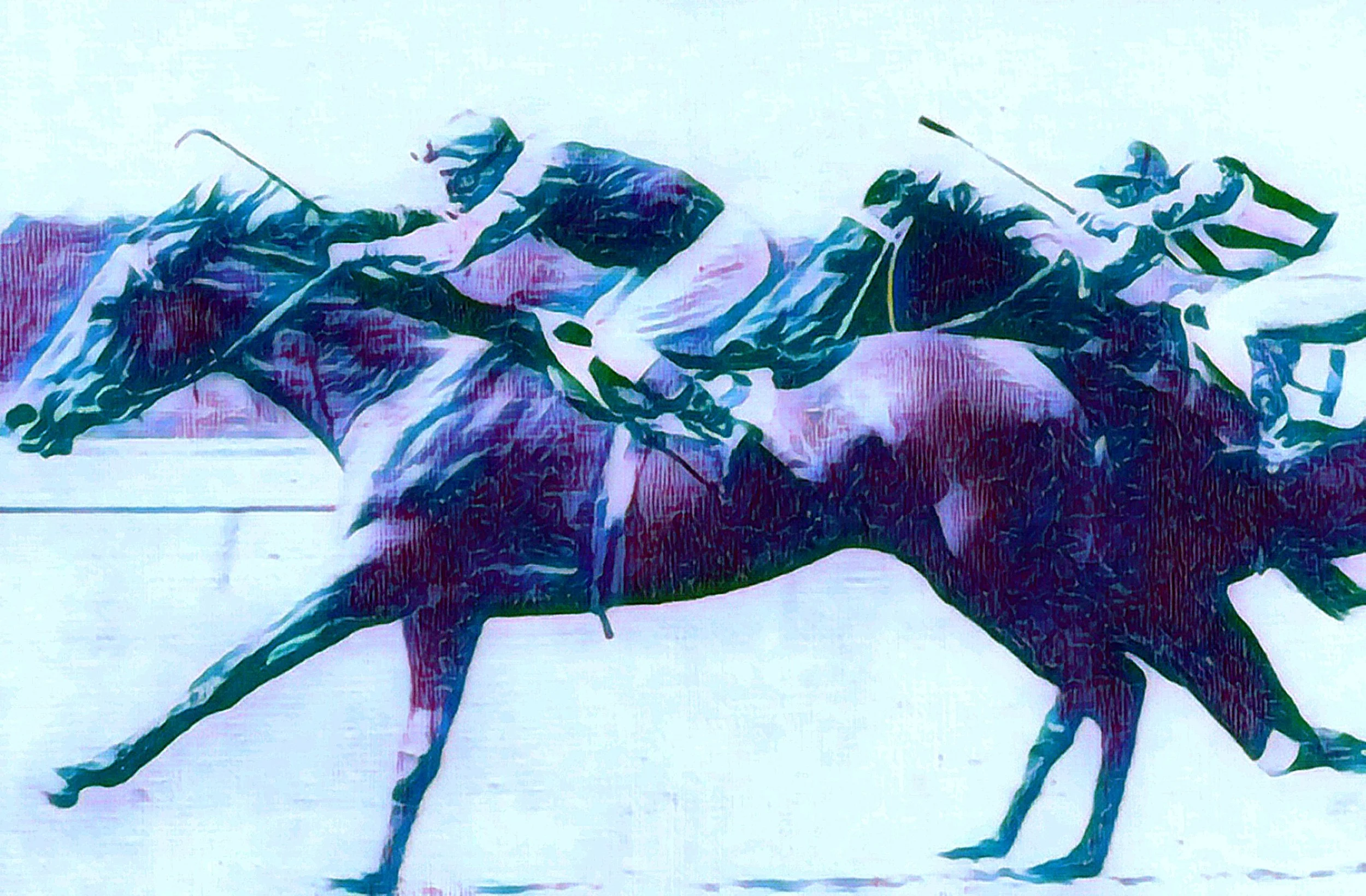
Despite health issues, Carioca would go on to become a highly popular figure among Sydney racegoers
CARIOCA's early career was significantly impacted by persistent hoof ailments, resulting in only three victories across his first nine starts and extended periods on the sidelines. But as these foot-related challenges gradually abated, Carioca embarked on a remarkable trajectory of success, securing an additional 17 wins, including a Sydney Cup and an AJC Metropolitan. Despite an initial inconsistent start to his racing career, Carioca achieved a remarkable record of 20 victories and 16 minor placings, ultimately becoming a highly popular figure among Sydney audiences and sweeping all aside in season 1952-53.
CARIOCA's racing career would be overseen by trainer Percy Hoysted, a cousin of the renowned Fred Hoysted, at the Warwick Farm facility. This nondescript three-year-old bay colt, sired by FELT YET and out of SING AGAIN, was housed in the Brisbane stable where only forty-three days earlier he had broken through for his first win in a Maiden Handicap at Eagle Farm.
The Thoroughbred was acquired as a yearling for 100 Guineas directly from the paddock by the esteemed Queensland trainer, Jack Booshand. Notably, several years prior, Booshand had successfully trained the colt's sire to victory in the Queensland Guineas and as a Brisbane jockey had won that race on SPEAR CHIEF. He formally registered the colt under the name CARIOCA. During his early two-year-old season, Carioca demonstrated exceptional speed in trials conducted at Toowoomba, prompting Jack Booshand to transport him to Sydney. Despite this promising performance, Carioca was defeated in both of his starts there in November 1949.
Booshand has granted his associate, Percy "Duck" Hoysted, a twelve-month lease for Carioca. Their friendship originated during their time as apprentice jockeys. Prior to his relocation to Sydney, Hoysted was a prominent rider in the Southern Districts while residing in Wagga. Upon concluding his riding career, he successfully transitioned into training, achieving numerous victories from his Forsyth Street stables in Wagga.
Following a victory in a Novice Handicap at Hawkesbury in late May with Carioca, Hoysted's racing opportunities with the horse were curtailed due to a foot infection. Consequently, Booshand extended the lease for an additional year, through July 1953, acknowledging this setback and the limited prior engagements. A more serious issue then developed with Carioca’s hoofs. This was caused by the shoes exerting too much pressure on the soles of his feet. New shoes were fitted but the hoofs had become shelly and damaged. Time was the only cure so as to allow the walls of the hoofs to regrow and rectify the issue. These problems kept Carioca from the track for nine months.
Carioca's subsequent campaign, spanning the spring and early summer of 1952 as a more mature five-year-old, proved to be a remarkable period. Following an unplaced performance at the Tattersall's Club September meeting and a second-place finish in the Kensington Handicap during the Randwick Spring Meeting, Carioca was partnered with jockey Billy Cook. A win over the Randwick mile in the Pagewood Handicap and another also over the Randwick mile in a Welter followed. In both races Carioca reached the lead a furlong out and won running away. This collaboration with Billy Cook marked a pivotal moment, as Carioca went on to secure victories in seven consecutive races, notably achieving the esteemed Villiers Stakes-Summer Cup double at the 1952 A.J.C. Summer Meeting and won over 6 furlongs (1200m) at Rosehill in a Flying Handicap, breaking the track record by a ½ second.
At winning his seventh successive race, Percy Hoysted described Carioca thus, “He is a trainer’s “dream horse”, not because of his ability, but because he’s just so easy to train.” Bill Cook described him saying, “I didn’t realise how good a horse he is. Carioca is the best horse I’ve ever ridden.” Despite the temptation to keep a horse in form going, Hoysted and Booshand put Carioca away for the autumn.
Following a nine-week hiatus from racing, Hoysted reintroduced Carioca for an autumn campaign, which culminated in victories at both the A.J.C. Chipping Norton Stakes and the Sydney Cup. Carioca demoralised the Sydney Cup field with an effortless win. In eighth place at half distance - at least 15 lengths from the lead - Cook began edging Carioca forward. Still in tenth place at the 5 furlong mark the continued progress forward saw Carioca take the turn in fifth position. Cook had Carioca going so well he joined the lead on straightening and coasted to the line, unextended to win by 2½ lengths to the second horse ADVOCATE. Cook knew he had the race won 3 furlongs from home.
There was speculation about Carioca heading to Brisbane for the Cup; Jack Booshand would have dearly loved that to occur, but the weight and the desire for a Melbourne spring campaign decided the issue - Carioca was sent for a spell. In 14 starts at five years old Carioca had won 10 races and placed 3 times.
The subsequent spring saw the progeny of Felt Yet return to Randwick, where it secured a triumph in The Metropolitan, carrying 9 st. 7lb (60kg) and narrowly defeating the esteemed HYDROGEN, despite conceding 4lb to the four-year-old. The 48 hours preceding that race were notably eventful. Carioca had placed third in the Epsom Handicap the previous Saturday, carrying 9 st. 7lb, and was defeated by five lengths by SILVER PHANTOM, who set an Australian record time, despite Carioca being the 5/4 favourite. Carioca’s effort in the Epsom Handicap was extraordinary; thirteenth of fourteen at the half mile and on the turn, Bill Cook had the horrendous experience of seeing HIGH LAW and BON ROUGE fall in front of him. Carioca however had the reflexes to jump the fallen horse and avoid a calamity. The incident, however, took away any chance of Carioca winning the race yet he still managed to run third, albeit beaten 5 lengths.
This demanding race significantly impacted Carioca, leading Hoysted to seriously contemplate withdrawing the horse from The Metropolitan. However, Potter and Parry-Okeden, the chairman and secretary of the A.J.C. respectively, engaged with Hoysted and stipulated that the club's veterinary surgeon would need to inspect the horse before any withdrawal could be authorized. The trainer stated, after the trip by float from Warwick Farm, was shivering, sweating and was not 100 per cent.
Hoysted protested Carioca was fatigued by his hard race in the Epsom Handicap on the Saturday and unfit to race, but was forced to run him when threatened with "serious action." Carioca's brilliant finishing burst was missing, but by sheer determination he wore down HYDROGEN to win by a long head.
CARIOCA maintained a successful racing career through his seven-year-old season, ultimately retiring from the Turf with total stakes winnings of £35,662. His impressive record included 20 wins, 7 second-place finishes, and 9 third-place finishes across 44 races. Notably, 'Duck' Hoysted trained Carioca for all but five of these starts and all but two of his victories. At the time he leased Carioca, Percy Hoysted was a seasoned 60-year-old trainer with extensive experience in the equine industry. Much like his cousin Fred at Mentone, 'Duck' at Warwick Farm possessed the expertise to identify and develop exceptional talent, and in Carioca, he found a truly remarkable horse. Carioca did return "home" to Queenland and won the QTC Bribie Handicap at Eagle Farm in 1955 where he carried 10st 3lbs. (65kg) to victory before returning to Sydney to win the Chipping Norton.
Jack Booshand retired Carioca to his property in Toowoomba, Queensland where he commenced stud duties in the 1955-56 breeding season. From information available it appears Carioca was still active at stud in the 1966-67 breeding season, however he was not a commercially successful sire. Little information is available on what became of Carioca after he retired.
CARIOCA was most commonly compared to BERNBOROUGH both in physical stature and in ability. He was undoubtedly a great stayer having won both a Sydney Cup and a Metropolitan Handicap. He was also a great sprinter with four course records, three in successive races. The few horses that can beat the best sprinters and the best stayers are champions and Carioca fits the bill nicely. He raced with distinction against some great horses, some of which were champions in their own right and proved to be a great Australian favourite, particularly among Sydney racegoers. Carioca was a worthy inductee into the Queensland Racing Hall of Fame
RACE STARTS - 44: 20-7-9
STAKE EARNINGS - £35,662
Villers Stakes (1952)
Randwick Summer Cup (1952)
Chipping Norton Stakes (1953/1955)
Sydney Cup (1953)
Theo Marks Quality (1953)
Metropolitan Handicap (1953)
Rosehill Club Stakes (1954)
Liverpool Handicap (1954)
Rosehill Railway (1954)
Bribie Handicap (1955)