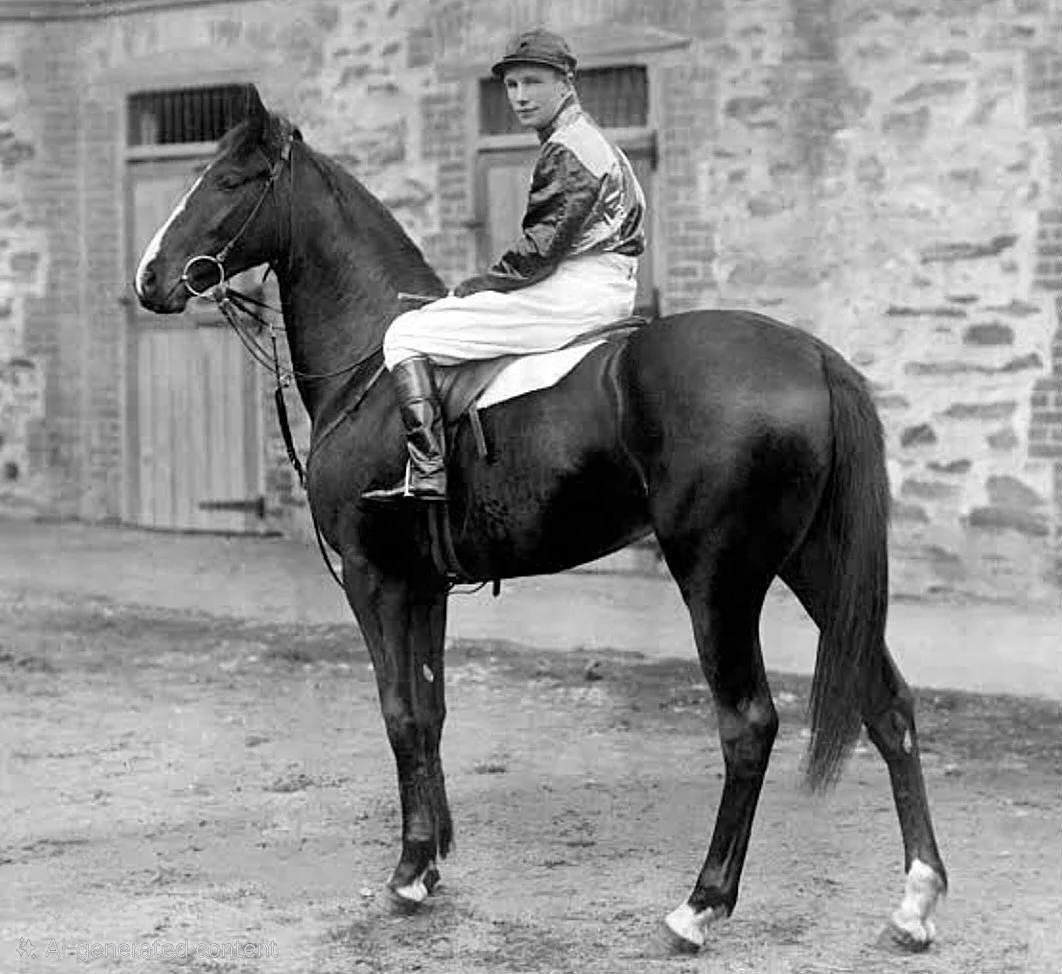
DRONGO
DRONGO is a term of insult that came about based on the name and exploits of one horse in the 1920s who just couldn't do enough to win - but he was so much better
The polite interpretation of a drongo is a “no-hoper,” a “loser,” or a bit of a “duffer" and the insult worked its way into the Australian slang vocabulary on account of one horse - the infamous DRONGO. He had pedigree, style and one of the best Australian jockeys of the era on his back, but one thing the gutsy big bay colt DRONGO never possessed, was an ounce of good luck. The story of Drongo is one that every race fan should know. It is the story of a loser with heart, talent and a mountain of determination. If Drongo had won the Victoria Derby, the derogatory term would almost certainly now not exist. But sadly he is best remembered as the immortal loser who failed to ever get across the line first.
Despite his stout breeding, Drongo couldn’t win a single race in 37 attempts. Contrary to popular opinion, however, he wasn’t hopeless - he ran only in city metropolitan races and often on the best racecourses against the very best horses of his era. He finished second in the 1923 Victoria Derby and third in the 1924 AJC St Leger; races for the best staying three- year-olds. Drongo, as far as racehorses go wasn’t half bad, and definitely better than average, although it didn’t take long for punters to claim him a “mug” or “a bit of a drongo," - meaning a try-hard, an also-ran, a champion that never was. From then on the phase was being used freely throughout the clubs, pubs and racecourses of Australia to describe someone who is slow-witted or incompetent.
But in the 1920s, Drongo was in all the racebooks of Australia's premier turf clubs as a much-liked racehorse who after running second in the Victoria Derby, three days later started in the prestigious Melbourne Cup, where he finished in the middle of 26 starters and well back from winner and favourite BITALLI.
He finished 3rd in a Memsie, 5th in a Sydney Cup, 2nd in a VRC St Leger and 4th in the King's Plate. Drongo was then transported to South Australia for a shot at the 1925 Adelaide Cup. Ridden by Billy Duncan, Drongo impressed with a second place in the Fisher Handicap at Morphettville only to start favourite in the Cup. Once again he failed to deliver, running fourth to STRALIA. As a four-year-old Drongo promised so much and he was often touted by pressman as "the horse to beat" in the spring majors. Aimed for a second time at Melbourne Cup he placed third in the Herbert Power Handicap won by EASINGWOLD before failing in the Hotham Handicap won by 1922 Melbourne Cup winner KING INGODA. Maybe he just didn't want all the glory and enjoyed running with horses near or around him.
The unfortunate horse never had the opportunity to participate in a country meet where he could have refined his strong finish and emerged from the shadows of champions. Hence the expression was born. Despite his losing streak, his owner, Dorothy Wood - the daughter of a prominent racehorse owner - couldn't quite give up on him, and neither could punters, the press and the great jockey Bobby Lewis who rode in 33 Melbourne Cups, won four, and rode Drongo on many occasions. Even the legendary Harold Badger who rode the horse in trackwork reckoned he wasn't half bad. Badger claimed, "Many times when I've dismounted on the track after a race. I've heard owners and trainers exclaim, "What a Drongo!"
DRONGO, named after the Spangled Drongo bird, was sired by LANIUS, a participant in the 1917 Melbourne Cup, and born to LYS D'OR, whose paternal lineage included the sire of CARBINE. Foaled in 1920, he raced from February 1923 until 1925, taking £2,200 for his owner and more than paying his way in tough economic times, with five seconds placings and seven thirds. He was unlucky to be competing in seasons when some great gallopers were racing; including LILLYPOND, WYNETTE, KING INGODA, THE CYPHER and MAID OF THE MIST. In a few races, many of these high quality horses finished behind Drongo, which reflects his staying ability. This should correct any impression that he was a "duffer." He was anything but - and so much more than that.
History doesn't record what became of Drongo when he retired, but in 1926 it does mention that he suffered blood poisoning. Newspapers of the time reported that Drongo died, but it was later discovered that he recovered from that illness and he lived a long life. This great Australian insult was originally an RAAF term for a raw recruit when it appeared again in the early 1940s, but its origin reaches back to our old mate, DRONGO and is still used today, mostly in a light-hearted or humorous way. No other horse can lay claim to this kind of particular fame.