COLIN JILLINGS
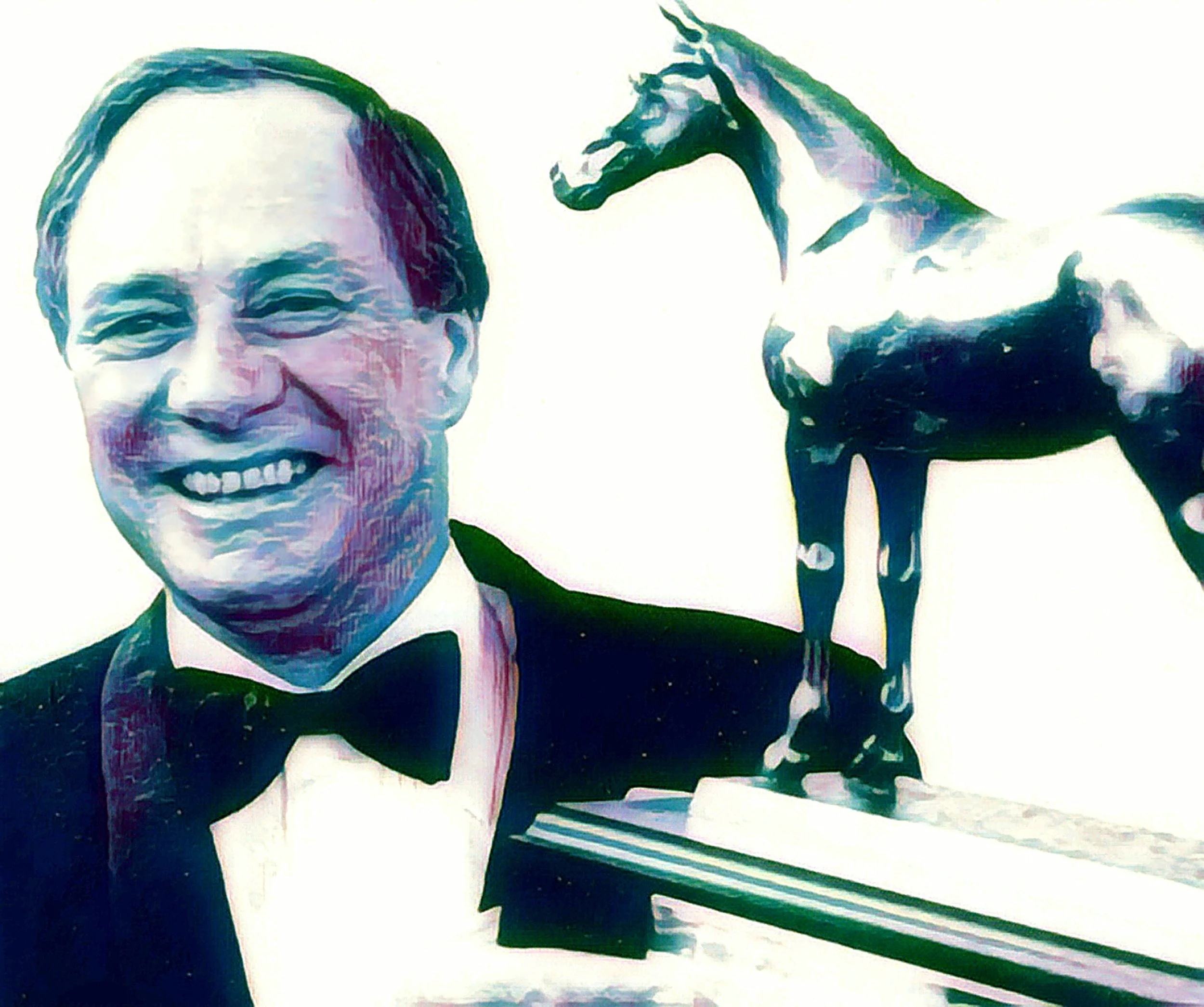
Jillings was working in the Westfield freezing works when offered a private trainer’s role and met near-immediate success
Regarded as a master trainer of stayers, COLIN JILLINGS trained 1327 winners in total, 703 of those in partnership with fellow trainer Richard Yuill. One of racing’s gentlemen, he was respected and admired by his peers. Jillings retired in 2004 after holding a training licence for a remarkable 54 years. Colin Jillings was many things to the hugely diverse circle he moved in, but first and foremost he was a master horseman who lived for his horses.
While still in his 20s, Jillings sent out his first winner LAWFUL (Fair’s Fair) who would go on to win the Great Northern Derby in 1958. Jillings was to send out a Derby winner in each subsequent decade until his retirement. He never trained on a large scale, which made winning a premiership an unrealistic target, but from the outset displayed a rare ability to successfully target big races. His ability to set a horse for a feature race and get it to the target in peak form and at the right weight – a key skill during the period when the richest races were mostly handicaps – was almost unmatched. Underpinning his success was a strong work ethic and keen attention to detail, together with a genuine affection for horses.
As well as training five G1 New Zealand Derby winners, he trained three G1 New Zealand Oaks winners, and won four G1 Auckland Cups, a G1 Wellington Cup and two G1 New Zealand Cups. The best horse Jillo may have ever trained was the sensational three-year-old, UNCLE REMUS (Bandmaster) who he trained for Kim Clotworthy and Grace Donaldson. He won 15 of his 28 starts including 10 in a row during his incredible three-year-old season of 1977/78 and was accompanied on his exploits by former top jockey Bob Vance. Part of that 10-race winning streak included the G1 New Zealand Derby, the G1 New Zealand 2000 Guineas, the G2 Canterbury Gold Cup and the G2 Wellington Stakes. The Jillings-Vance association remained solid beyond those champion apprentice days to include the champion colt in MCGINTY, and Vance still speaks with admiration and respect of the man who shaped his life.
Jillings by then had wide renown as a trainer, having taken out his licence at only 19 years after his highly promising jockey career had been curtailed by weight issues. He could ride too, as illustrated by his mid-teens win on ROYAL SCOT in the 1946 Railway Handicap at Ellerslie, where he served his apprenticeship with Ivan Tucker. Jillings was riding trackwork at Ellerslie as a 10-year-old and had his first race ride at 12. A fractured skull, suffered in a trackwork fall, sidelined him for 11 months but he recorded his first win as a 13-year-old, when still a pupil at St Peters College. He was always going to get too big to remain a jockey for long but was the leading northern apprentice in the 1945-46 season and won the Railway at Ellerslie and finished third in an Auckland Cup before his riding career ended.
He was working in the Westfield freezing works when Auckland jeweller Albert Brownson offered him a private trainer’s role and the combination met near-immediate success when the two horses they took to Sydney both won. His time with Brownson was short-lived, however, and Jillings found his way to the soon-to-boom South Waikato timber town of Tokoroa, where he worked on the Kinleith pulp and paper mill development. Destiny struck in the form of a local lass Alison, who he was to be married to for 65 years.
His versatility as a trainer was demonstrated in jumps racing, winning three Great Northern Steeples and two Great Northern Hurdles. Horses remained on the young man’s mind during his time in Tokoroa, leading to an acquisition by the name of ARMED, who he patched up to win the 1959 Grand National Hurdle. Armed was ridden by Southland-born jumps jockey Brian “Baggy” Hillis, who was to combine again with Jillings on one of our very best jumpers, BROCKTON, in his 1972 Great Northern Hurdle-Steeplechase double. In the mid-1950s Jillings had moved back north to train, eventually establishing a stable in Porchester Road directly opposite the Auckland Racing Club’s Takanini training centre, where he was to remain until his retirement in 2005. The winners simply flowed under Jillings’ astute guidance.
The 1956 Auckland Cup with YEMAN was an early success, along with LAWFUL and STIPULATE in the 1958 and 1960 editions of the Great Northern Derby. Jillings was associated with a host of top-line gallopers and Uncle Remus aside, he also prepared the multiple Group 1 winner MCGINTY (One Pound Sterling), successful in the Caulfield Stakes, Rawson Stakes, Canterbury Guineas and at home in two editions of the Air New Zealand Stakes and the George Adams Handicap. McGinty might have been the first New Zealand-trained Golden Slipper winner had he not been injured, when beating the subsequent Slipper winner MARSCAY in the main lead-up race.
In partnership with Yuill, he also trained THE PHANTOM CHANCE (Noble Bijou), who won the G1 Cox Plate and the G1 New Zealand Derby. Jillings did not take a lot of horses to Australia but one of the high points of his career came in Melbourne, when he won with The Phantom Chance. McGinty and Tycoon Lil were all Group 1 winners across the Tasman. Referred to as "Jillo" by his associates and clientele, and "Mr. Jillings" by professional jockeys, he provided mentorship to Bob Vance during his tenure as a jockey, as well as to Mark Sweeney and Sam Spratt.
The racing industry honoured him with the Outstanding Contribution To Racing award in 1999 and he was inducted into the NZ Racing Hall of Fame in 2008. Jillings, ever philosophical about the unpredictable nature of racing, responded with a hearty laugh when his final runner at the races, CHEVAL DE TROY, notably finished last in the BMW at Rosehill in 2005, a race famously won by the formidable mare MAKYBE DIVA.