BROOKBY SONG
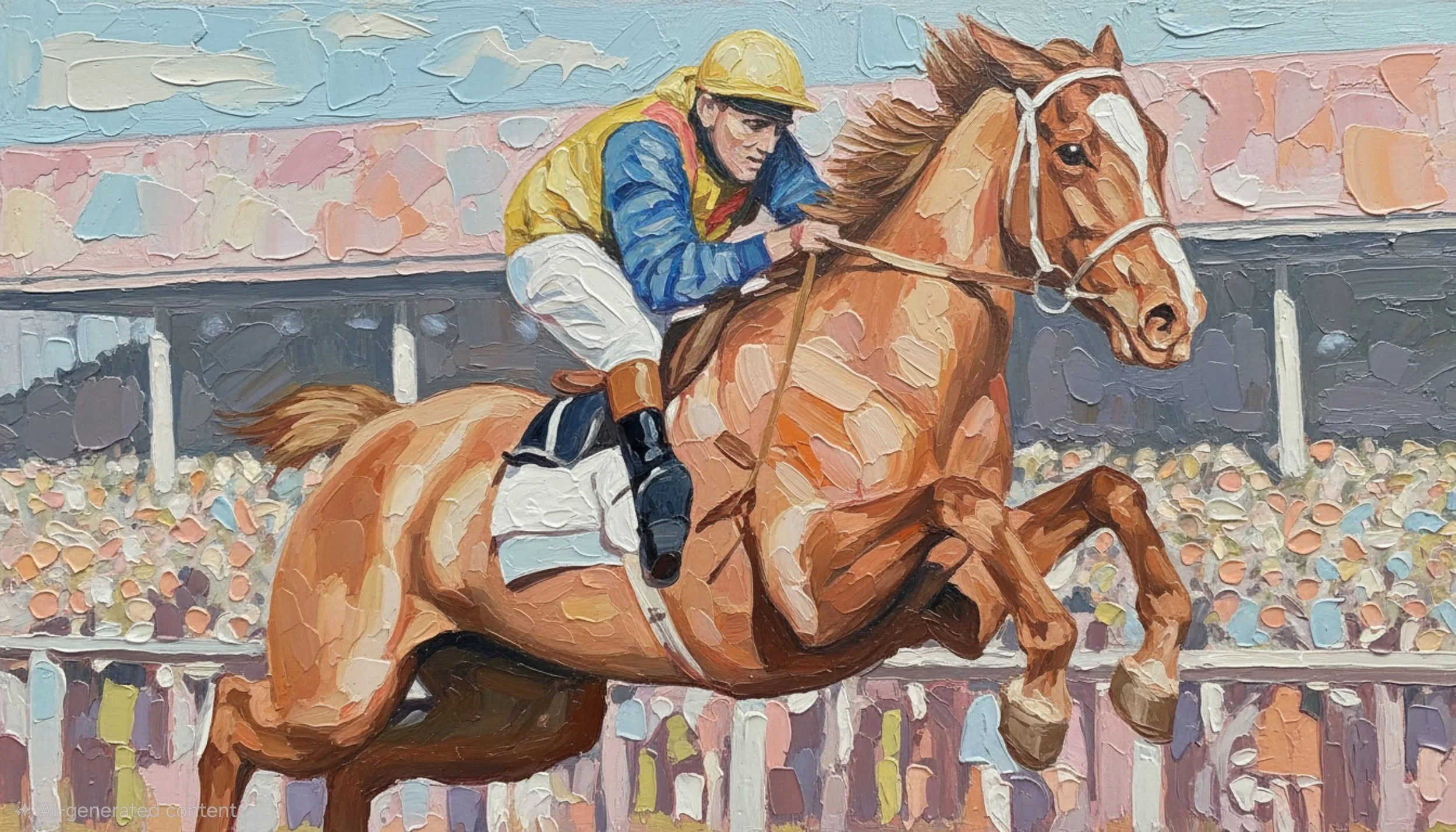
Brookby Song was lumped with big weights but still managed to win the Steeplechase triple crown in 1948 with his stag-like jumping prowess
BROOKBY SONG, a distinguished chestnut gelding foaled in 1940, emerged as one of New Zealand's most exceptional steeplechase horses and the preeminent performer of his era following World War II. His lineage traces to the sire HUNTING SONG (Hurry on - Pasta) from HULOMEE. Hunting Song stood at Hillcrest Stud and was the leading New Zealand sire from 1932-1938. GAINE CARRINGTON, a son of Hunting Song, ran successfully in 1933-34 as a Caulfield Cup winner and the sire produced top stayers for six years.
Brookby Song achieved a remarkable victory in his inaugural jumping event, triumphing by a margin of ten lengths. His exceptional spring action, stag-like jumping prowess, endurance, and capacity to carry substantial weight culminated in 1948, when he became only the third horse in history to secure victories in the Great Northern, Wellington, and Grand National Steeples within a single year.
The chestnut gelding had jumping blood on both sides of his pedigree being out of the great sires of jumpers. Born and breed at Harry Whitford's property in Brookby, south of Clevedon, he was initially owned by Harry and keen huntsman, Artie Short. When Artie passed away, Whitford took over sole ownership before his first race as s four-year-old.
After being unplaced and looking more like an endurance type who could stay all day, Whitford changed direction and focused towards the jumps discipline. Una Hall, wife of trainer Bob Hall took to riding BROOKBY SONG in the fields to build his strength and stamina.
BROOKBY SONG impressed as a five-year-old when returning to the track in August of 1945, winning his first race by ten lengths. The newspapers were quick to recognise his talent, calling him a "dashing fencer" and "all going well, he should not have much difficulty in achieving further success." In his third race, he did not have much trouble dismissing the field in the Waikato Hunt Cup before spelling for the summer.
He returned in the autumn with an unsuccessful attempt at hurdling, so went back to the bigger fences where he won the Waikato Steeplechase on a Heavy track, and in much lighter than if the handicapper had an open hand. Whitford was reported to have turned down an offer of £1000 for the horse after that race which ended up being a shrewd move. His first Great Northern Steeplechase didn't go to plan, with jockey Jack Chaplin bearing responsibility for his second place, confessing he took too long before mounting a run and was unable to catch eventual winner, OUR NATION.
BROOKBY SONG redeemed himself with three successive wins to round out the 1945 jumps season. More wins followed in 1946, including the Pakuranga Hunt Cup, a notable victory carrying the huge impost of 11st 10lbs (74.5kg), yet he still won easily. BROOKBY SONG was now a star with race fans, yet his greatest deeds were ahead of him. Carrying 17kg above the minimum as a six-year-old he made no mistakes in a second bid in the Great Northern on the second day of the Auckland Racing Clubs winter meeting. Carrying the top weight of 11st 9lb, the big chestnut pulled to the front with a round to go and coasted to a 12-length margin victory over SIR PEEVE.
A slip in his next race cost him a second win at the Ellerslie meeting, and although he wasn't injured, he carried on riderless and ran down the outside fence past the big grandstand crowd to huge applause from those in attendance. Consequently, the horse was turned out for a spell.
BROOKBY didn't have the most ideal lead up to the Great Northern in 1948. With 12 stone (76kg) on his back, the public let him go out to 3/4 in the betting, but they still cheered as he outjumped and outstayed his rivals to cruise home by a margin of eight lengths from TOWN SURVEY. Some astute punters believed the rare chaser was in too light for the four-mile event, but after 8mins and 6sec he had claimed the £2500 first prize. The geldings’ connections then turned their sights to Trentham for the first time and the £3500 Wellington Steeplechase. Brookby Song beat his old rival MASTER MERUITT by a neck within the last few strides. The gallant Auckland horse looked beaten when ALBINO raced to the lead with a half mile from home. leaving Brookby eight lengths in his wake. But jockey Jack Chaplin rallied his horse who responded well.
The next goal was to complete the treble by winning the Grand National at Riccarton. The southerners showed no leniency, giving him a staggering 12st 7lbs (79kg) to carry. Brookby Song took it in stride, jumping ahead by more than seven lengths from ARABIAN KNIGHT who was three stone lighter. The feature win gave him the triple crown of New Zealand jumps racing which had only been achieved twice before.
BROOKBY SONG never had a chance to defend those titles, including an 8th in the Great Northern with an imposing weight of 12st 10lbs (80kg) and the heroic chaser just couldn't recapture his great form from the previous season. He won twelve times from 39 starts and his Stakes earnings were a record for a jumper in New Zealand and Australia. He retired to the Whitford family farm south of Auckland and delighted people wirh special track appearances before his passing at the age of 34. Brookby Song was inducted into the NZ Racing Hall of Fame in 2018.
RACE RECORD - 39: 12-5-3
PRIZEMONEY - £17,260
Waikato Hunt Cup (1945)
Waikato Steeplechase (1946)
Pakuranga Hunt Cup (1946)
Great Northern Steeplechase (1946/1948)
Wellington Steeplechase (1948)
Grand National Steeplechase (1948)